

Eye Tattoos and Their Spiritual Meaning: From the Evil Eye to the Third Eye
The eye symbol is one of humanity's oldest and most powerful. Across cultures, religions, and esoteric traditions, it has represented protection, divine knowledge, intuition, vigilance, judgment, and the ability to see beyond appearances.
That makes the eye tattoo unusually rich in meaning. An eye can watch over you, protect you from another person's gaze, represent a god, symbolize spiritual awakening, or suggest that nothing can remain hidden. Change the shape, surrounding symbols, or cultural context, however, and its meaning can shift dramatically.
The Evil Eye, the nazar, the Eye of Horus, the Eye of Ra, the Eye of Providence, the Buddhist eyes seen on Nepalese stupas, and the mystical third eye are related through the same basic human fascination with sight as a form of power—but they are not interchangeable symbols.

Why Is the Eye Such a Powerful Spiritual Symbol?
Sight gives us knowledge at a distance. We can observe something without touching it, identify danger before it reaches us, and recognize another person's attention simply by noticing where they are looking. It is therefore unsurprising that eyes became associated with powers that ordinary human vision does not possess.
In religious symbolism, an eye may represent a deity capable of seeing everything. In magical traditions, an eye may defend its wearer from invisible dangers. In mystical traditions, an additional or inner eye represents a form of perception beyond the physical senses.
Most spiritual eye symbolism can be understood through several recurring ideas:
- Protection: An eye watches for danger and guards its wearer.
- Awareness: The eye represents consciousness, attention, and perception.
- Divine knowledge: A supernatural eye sees what human beings cannot.
- Intuition: Seeing becomes a metaphor for understanding something beyond ordinary sensory evidence.
- Judgment: Being watched can imply moral accountability.
- Spiritual awakening: Opening one's eyes represents becoming conscious of a deeper reality.
- Power: The gaze itself may protect, bless, expose, threaten, or dominate.
This tension between seeing and being seen is what gives eye tattoos much of their symbolic intensity.
The Evil Eye: When the Gaze Becomes Dangerous
The Evil Eye is not originally the protective blue eye symbol itself. It is the much older belief that another person's gaze can transmit misfortune, illness, or harm—sometimes deliberately, but in many traditions simply through envy, jealousy, or excessive admiration.
Beliefs surrounding the Evil Eye have existed in different forms throughout the Mediterranean, Middle East, North Africa, parts of Europe, and Asia for centuries. Protective objects developed in response to this fear of the harmful gaze.
An Evil Eye tattoo can therefore carry two seemingly opposite meanings depending on how it is understood: it can represent the dangerous gaze itself, or—much more commonly today—protection against negative intentions, envy, and harmful energy.

The Nazar: Protection from the Evil Eye
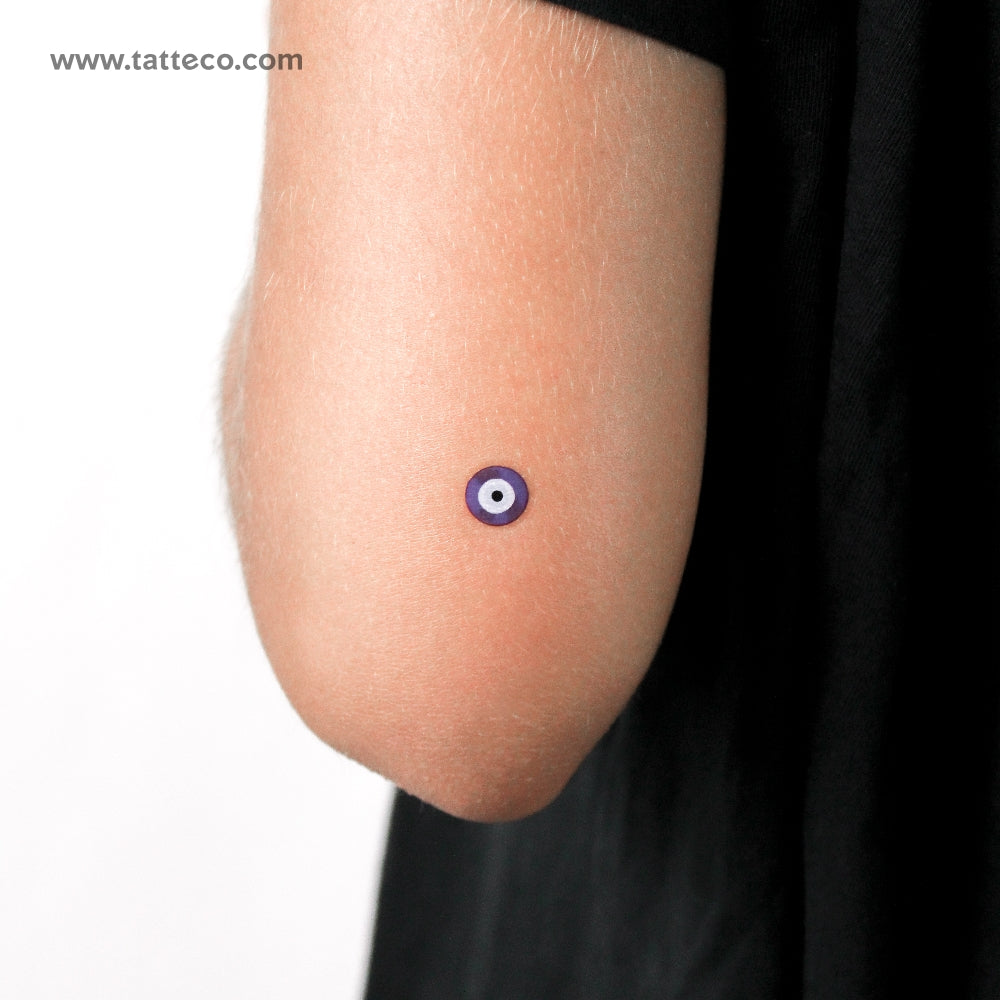
The nazar is often casually called an Evil Eye, but the distinction matters. The Evil Eye is the harmful gaze; the nazar is an amulet intended to protect against it.
The familiar design usually consists of concentric circles resembling an eye, traditionally dominated by blue, white, and darker blue or black. Versions of the eye-shaped amulet are especially associated today with Turkey and neighboring Mediterranean and Middle Eastern cultures.
As a tattoo, the nazar most directly expresses protection, good fortune, and resistance to envy or negative influences. In contemporary tattoo culture it may also function more broadly as a personal talisman: an eye permanently watching over its wearer.
The Eye of Horus: Healing, Restoration, and Protection
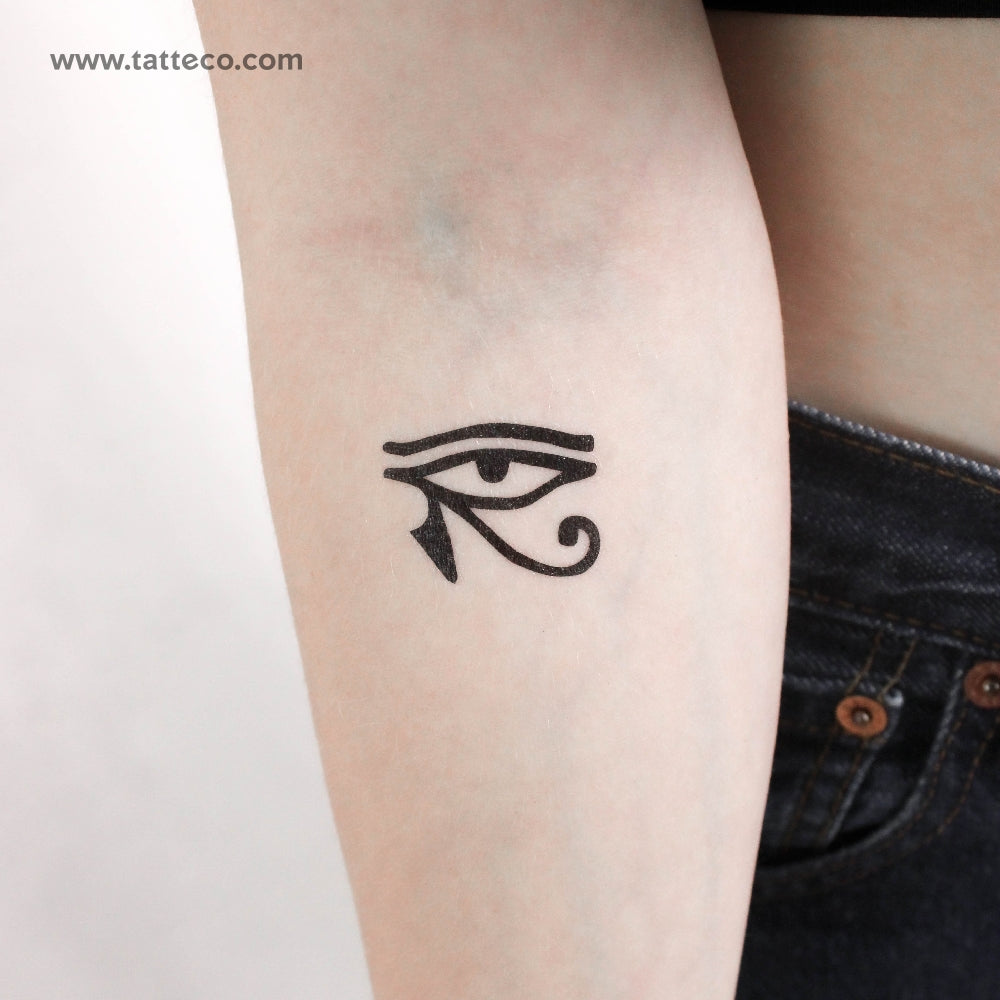
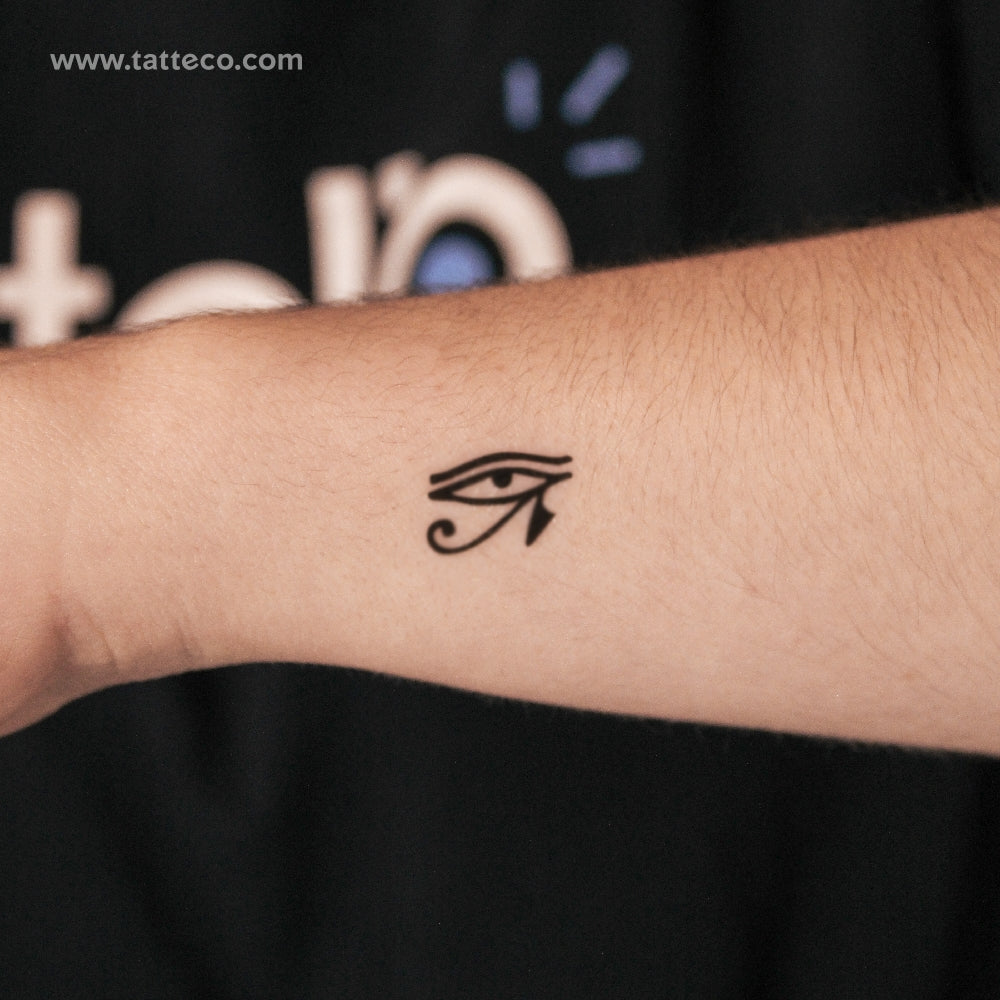
Few eye symbols are as recognizable as the Eye of Horus, also known as the wedjat eye.
In ancient Egyptian mythology, Horus' eye was injured or lost during his conflict with Seth and subsequently restored. The restored eye consequently became associated with healing, regeneration, protection, and wholeness.
Ancient Egyptians used wedjat-eye amulets for both the living and the dead. Its significance was therefore deeper than simply "an Egyptian eye": it represented something damaged being made whole again.
That gives the Eye of Horus tattoo a particularly personal modern interpretation. It can symbolize surviving a difficult period, recovering after loss, healing physically or emotionally, or carrying a protective symbol through a period of transformation.

Eye of Horus vs. Eye of Ra: What's the Difference?
The Eye of Ra and Eye of Horus are frequently confused, partly because Egyptian religious symbolism evolved over thousands of years and associations between gods, goddesses, and eyes were complex.
But as symbolic ideas they have a noticeably different character.
The restored Eye of Horus emphasizes healing, regeneration, and protective wholeness. The Eye of Ra is connected to the solar god Ra and to divine power acting upon the world. Egyptian myths personified the Eye of Ra through powerful goddesses, including figures associated with both protection and destructive force.
It is therefore a fiercer symbol: solar energy, royal power, vigilance, protection, and the ability to destroy threats. Where the Eye of Horus can suggest recovery after injury, the Eye of Ra can represent active power defending itself.
For a tattoo, the distinction can be useful. The Eye of Horus suits themes of recovery and restoration; the Eye of Ra carries a more forceful message of strength, sovereignty, and fierce protection.
The All-Seeing Eye: Nothing Escapes the Gaze
The All-Seeing Eye is better understood as a broad symbolic idea than as one single historical symbol.
An eye that sees everything can represent omniscience, higher consciousness, vigilance, or hidden knowledge. Depending on the context, the watcher might be God, the universe, one's own awakened consciousness—or a threatening power observing everyone beneath it.
This ambiguity is one reason the motif remains so compelling. The same eye can feel protective or unsettling. It may say "you are being watched over" or "you are being watched."
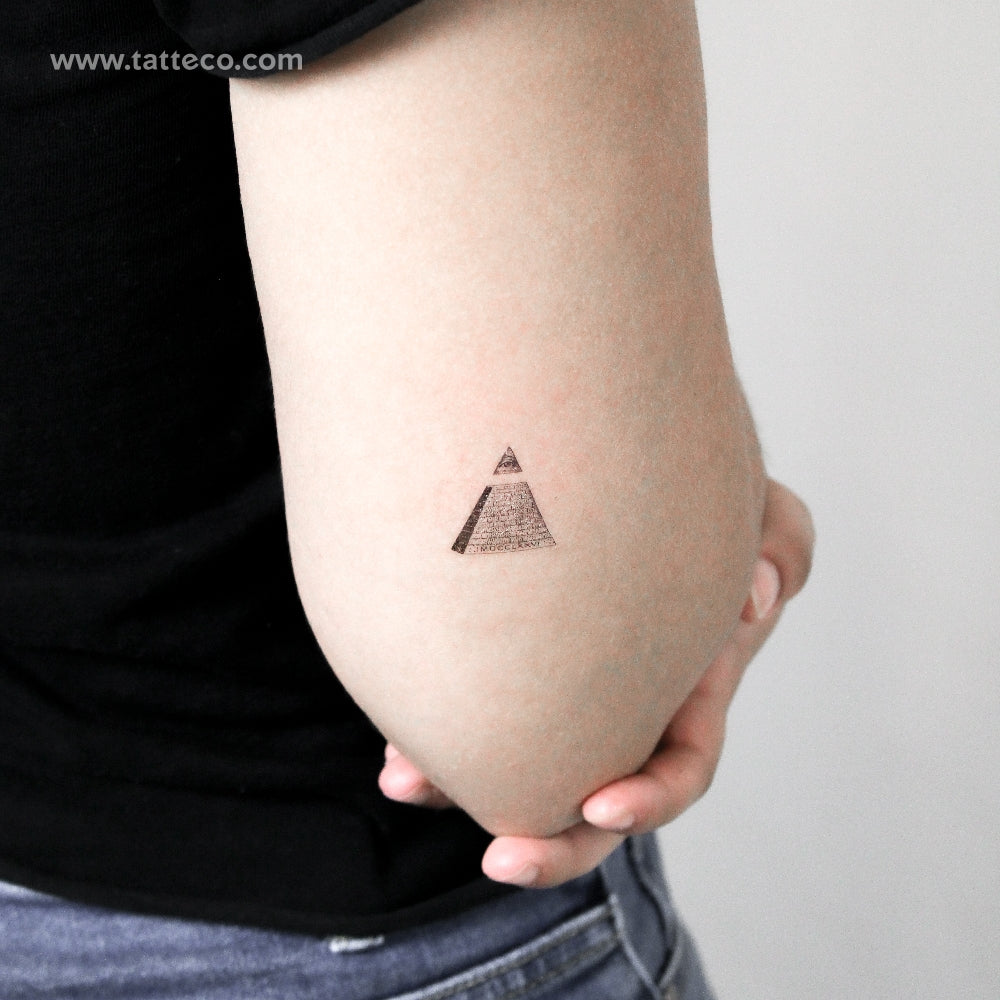
In esoteric tattoo imagery, the all-seeing eye is often combined with triangles, rays, pyramids, geometric forms, or celestial imagery. Those additions can shift it toward divine knowledge, mysticism, illumination, or occult symbolism.

The Eye of Providence: The Eye of God
The Eye of Providence is a more specific version of the all-seeing-eye motif. In European Christian iconography, an eye surrounded by rays—and frequently enclosed within a triangle—came to symbolize God watching over humanity, divine providence, and omniscience.
The triangle could additionally represent the Christian Trinity.
The symbol later entered other contexts. It appears above the unfinished pyramid on the reverse of the Great Seal of the United States and became associated with Freemasonry. Modern popular culture has gone even further, frequently connecting the image with the Illuminati, secret societies, and conspiracy theories.
Those later associations can obscure its older religious meaning. The Eye of Providence was not originally an Illuminati emblem. For a tattoo, it can therefore range from an expression of faith and divine guardianship to a symbol of enlightenment, hidden knowledge, or suspicion of unseen systems of power.
The Third Eye: Seeing Beyond Ordinary Sight
The third eye moves the symbolism inward.
Rather than a supernatural eye watching us from outside, it represents an ability to perceive what cannot be understood through normal vision alone. The concept is particularly associated with Hindu spiritual traditions and the ajna chakra, commonly located symbolically between the eyebrows.
In yogic, Hindu, and later esoteric interpretations, the third eye has become associated with intuition, insight, higher consciousness, self-knowledge, and spiritual awakening.
The expression "opening your third eye" is now widely used outside its original religious context to describe becoming aware of realities that were previously hidden—whether psychologically, spiritually, or philosophically.
For that reason, a third-eye tattoo can symbolize a commitment to looking beneath the surface: trusting intuition, questioning appearances, and trying to understand rather than merely observe.
The Compassionate Eyes of the Buddha
Another famous pair of spiritual eyes appears on Buddhist stupas in Nepal, most recognizably at monumental sites in the Kathmandu Valley.
These enormous painted Buddha eyes gaze in every direction. Unlike the threatening idea of surveillance, however, Buddhist interpretations emphasize awakened awareness. The Buddha does not merely look: the Buddha sees.
This makes the symbol particularly suited to ideas of wisdom, compassion, consciousness, and spiritual awareness. It evokes the difference between looking at the world through ordinary perception and understanding it through an awakened mind.
As a tattoo, the Compassionate Eyes of the Buddha can therefore represent mindfulness and the aspiration to meet the world with both greater awareness and greater compassion.

The Eye of Sauron: The Dark Side of the All-Seeing Eye
Modern fiction has also understood how powerful the idea of an all-seeing eye can be.
The Eye of Sauron from J.R.R. Tolkien's world is not an ancient spiritual symbol, but culturally it works as a dark inversion of many of the symbols above. Instead of divine knowledge providing protection, the supernatural gaze becomes a source of surveillance, domination, fear, and control.
It demonstrates the fundamental ambiguity of eye imagery. To be seen by a benevolent power can imply protection. To be seen by a hostile one means there is nowhere to hide.
In contemporary tattoo symbolism, an Eye of Sauron design may consequently represent power, obsession, vigilance, corruption, or the darker idea of an intelligence that is always watching.
The Fallen Angel's Gaze: Beauty, Anger, and Rebellion
Not every meaningful eye needs to belong to a religious symbol. Sometimes the expression of the eye itself carries the meaning.
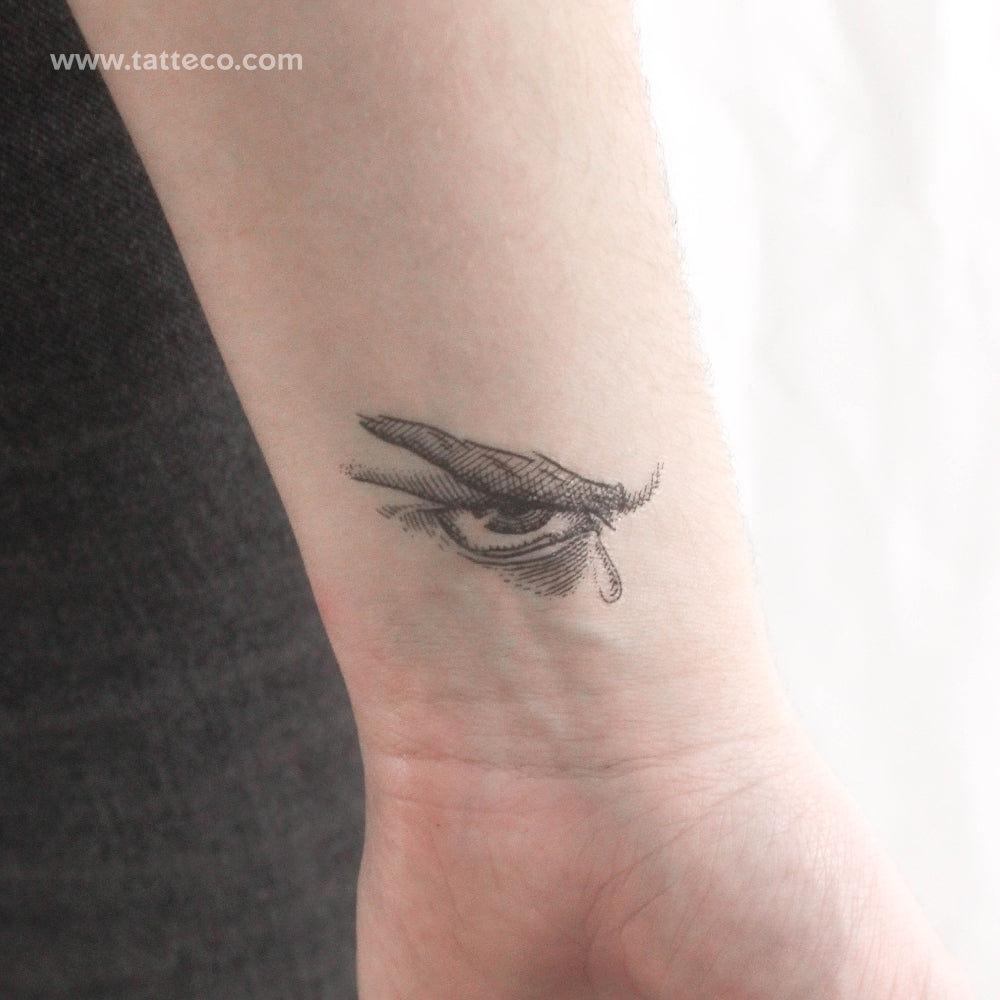
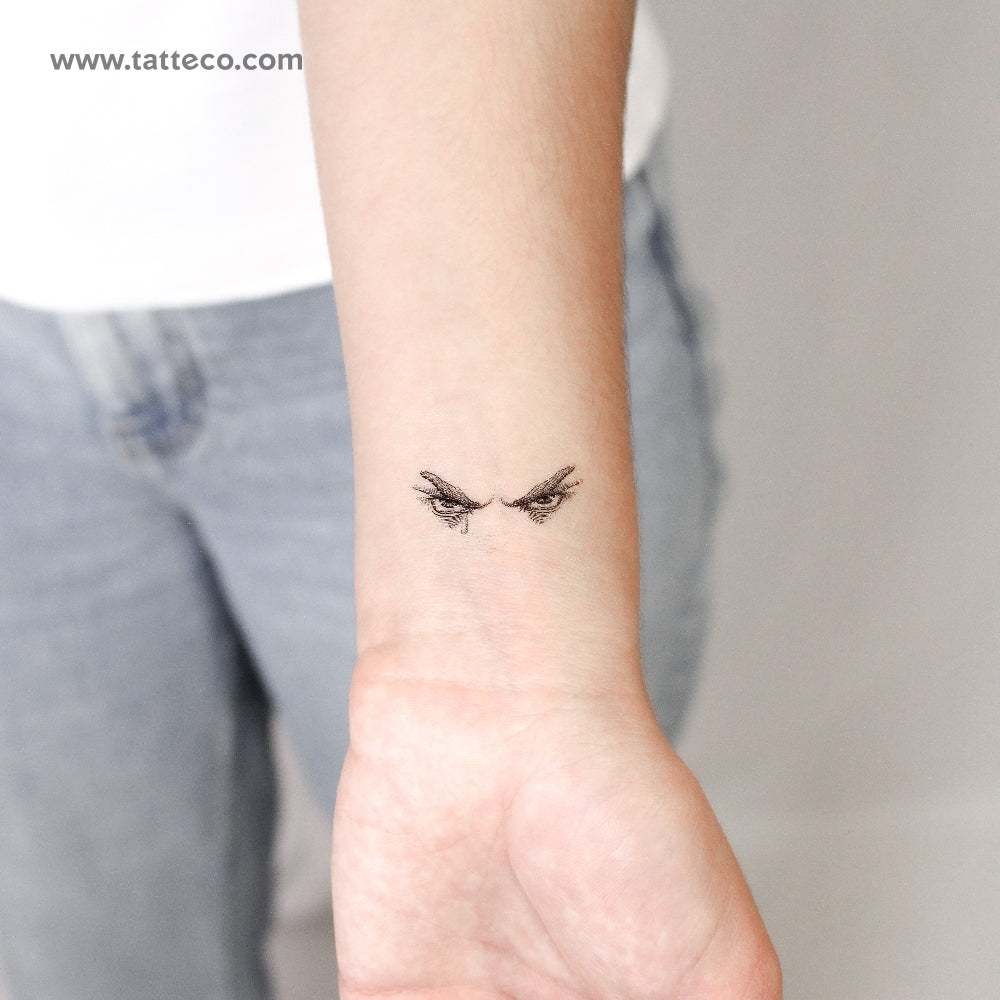
Alexandre Cabanel (1823–1889)'s The Fallen Angel (1847) is a striking example. The angel's intensely emotional gaze has become one of the most recognizable details of the painting: beautiful yet furious, wounded yet defiant.
Separated from the full composition, the eye can suggest rebellion, pride, exile, resentment, wounded beauty, and refusal to submit. The single tear makes the expression more complex. It is neither pure anger nor pure sadness, but the coexistence of both.
That gives the Fallen Angel eye a very different spiritual character from the Eye of Providence or Eye of Horus. It is not an amulet or sacred emblem. It is an artistic symbol of the inner conflict traditionally associated with the fallen angel: transcendence and rebellion occupying the same being.
The Crying Eye: Grief Made Visible
A crying eye tattoo reverses another fundamental quality of the eye. Instead of taking information in, something comes out.
The tear turns an eye from a symbol of observation into a symbol of emotional revelation.
Its meaning is less culturally fixed than symbols such as the Eye of Horus or nazar, making it particularly personal. A crying eye can represent grief, heartbreak, remembrance, empathy, emotional honesty, or release. It may commemorate something lost or simply acknowledge that vulnerability and strength can exist together.
In a broader spiritual reading, the crying eye can symbolize the painful side of awareness: once something has truly been seen or understood, it cannot always be unseen.

Eye Tattoo Meanings at a Glance
Although these symbols share the visual language of the eye, their cultural backgrounds and meanings are distinct.
| Symbol | Cultural Context | Core Meaning |
|---|---|---|
| Evil Eye | Mediterranean, Middle Eastern, and other traditions | Harmful gaze, envy, misfortune |
| Nazar | Turkish and neighboring cultures | Protection against the Evil Eye |
| Eye of Horus | Ancient Egypt | Healing, restoration, protection |
| Eye of Ra | Ancient Egypt | Solar power, divine force, fierce protection |
| All-Seeing Eye | Religious, esoteric, and modern imagery | Omniscience, awareness, hidden knowledge |
| Eye of Providence | Christian iconography and later traditions | Divine omniscience and providence |
| Third Eye | Hindu, yogic, and esoteric traditions | Intuition, insight, spiritual awakening |
| Buddha Eyes | Nepalese Buddhist symbolism | Wisdom, awareness, compassion |
| Eye of Sauron | Modern fantasy literature | Surveillance, domination, threatening power |
| Fallen Angel Eye | Religious art and modern reinterpretation | Rebellion, pride, wounded beauty |
| Crying Eye | Contemporary artistic symbolism | Grief, empathy, vulnerability, emotional release |
So What Does an Eye Tattoo Mean?
There is no single eye tattoo meaning. The symbolism depends on whose eye it is, what surrounds it, and what kind of gaze it represents.
An Eye of Horus may say, "I have been broken and restored." The Eye of Ra can say, "I have the power to defend myself." A nazar says, "Keep harmful intentions away." The Eye of Providence suggests that a higher power sees everything. The third eye turns the gaze inward, toward intuition and awakening. Buddha's eyes transform seeing into wisdom and compassion. A crying eye turns perception into emotion. And the Eye of Sauron takes the same ancient fantasy of supernatural sight and transforms it into something threatening.
Yet all of them grow from the same extraordinary idea: to see is to know.
That may be the deepest meaning behind the eye as a spiritual symbol. Physical eyes reveal the visible world. Symbolic eyes promise access to something beyond it—danger before it arrives, truth beneath appearances, the intentions of other people, divine knowledge, or unexplored parts of ourselves.
An eye tattoo can therefore be protective, religious, mystical, emotional, or unsettling. Sometimes it represents the desire to be watched over. Sometimes the desire to see more clearly. And sometimes it simply reminds us to keep our eyes open.


