

Finger Tattoos: Why You Should Try Them Before Going Permanent
Finger tattoos have become one of the most recognizable forms of minimalist body art. Small, expressive, and almost impossible to ignore, they turn an everyday part of your body into a canvas for personal expression. A tiny symbol or delicate arrangement can completely change the appearance of your hands.
But finger tattoos come with challenges that aren't always obvious from the photographs. They can be painful, difficult to maintain, and prone to fading. And because your hands are constantly visible, even the smallest tattoo can make a surprisingly big difference to how you see yourself.
That's why trying a temporary finger tattoo before committing to permanent ink is worth considering. It gives you the opportunity to experiment with design, placement, size, and visibility without making a permanent decision.
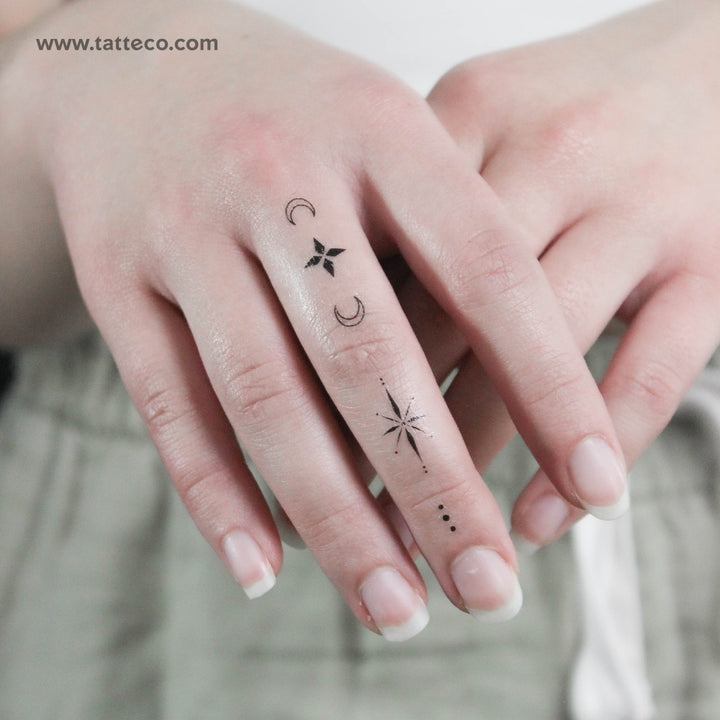
How Celebrities Made Finger Tattoos Popular
Finger tattoos have existed in different cultures for centuries, but their transformation into a mainstream fashion statement owes a great deal to celebrity culture.
During the late 2000s and early 2010s, musicians, models, and actors began wearing small tattoos on their fingers, turning what had often been considered an unconventional placement into a fashionable form of self-expression.
Rihanna was among the early influential figures. Her famous "Shhh..." tattoo, inked along her index finger in 2008, became one of her most recognizable designs. Its placement made it especially expressive: the lettering becomes part of a gesture whenever she raises her finger to her lips.
Then, in May 2013, Cara Delevingne got what would become one of the most iconic finger tattoos of the decade: a remarkably detailed lion's face on her index finger, created by celebrity tattoo artist Bang Bang.
At the height of her modeling career, Delevingne's lion appeared in fashion photographs, interviews, and social media posts. It demonstrated that a tattoo occupying only a few square centimeters could become a defining feature of someone's personal style.
Miley Cyrus was another early adopter, accumulating a collection of miniature tattoos across her fingers. Her approach helped popularize the idea of decorating several fingers with different symbols instead of committing to one large design.
Neymar also contributed to the wider visibility of tattooed hands in professional sports, while other well-known figures—including Lenny Kravitz, Katy Perry, Sam Smith, Demi Lovato, Chiara Ferragni, Hailey Bieber, and Anthony Joshua—have helped normalize visible hand and finger tattoos across music, fashion, entertainment, and sport.
Some embraced tiny symbols and lettering; others favored more elaborate compositions. Together, their influence helped establish hand tattoos as part of contemporary fashion rather than something reserved for tattoo enthusiasts.
Today, you don't need to be a celebrity to experiment with the look. Finger tattoos have become an accessible way to introduce body art into your personal style, whether through a single symbol or a composition spread across several fingers.
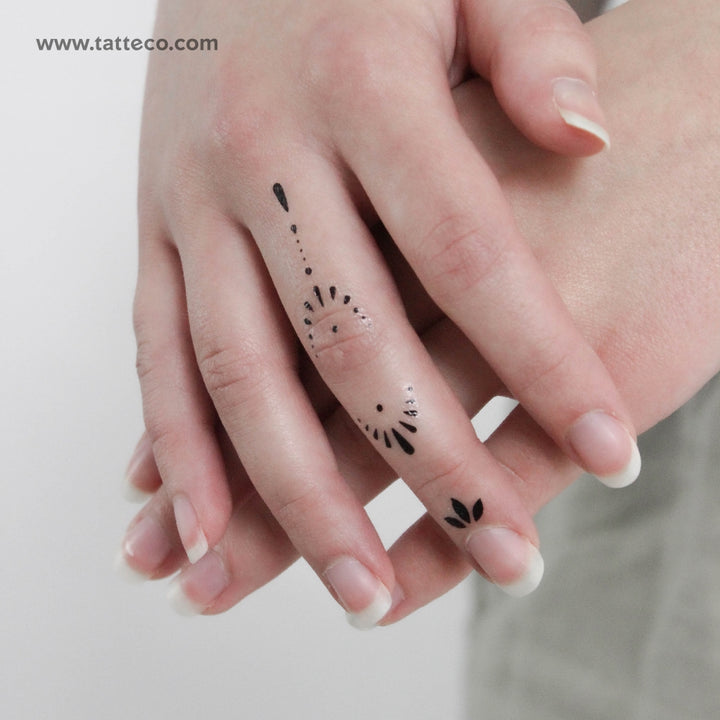
Why Are Finger Tattoos So Appealing?
Part of their appeal lies in the contrast between their size and visibility.
A tattoo on your back or thigh can remain hidden for most of the day. A finger tattoo is different. You see it while typing, cooking, holding a coffee, taking photographs, or reaching for something. It becomes part of the way your hands look and move.
Finger tattoos can also work like jewelry. A small design might complement a ring, decorate the space between knuckles, or add a distinctive detail to an otherwise undecorated hand.
They are particularly attractive to people who appreciate minimalist aesthetics. A simple shape or a few carefully arranged lines can create a recognizable design without requiring much space.
But there's a significant difference between liking a tattoo on somebody else's finger and enjoying the same design on your own hand every day.
That's the first reason to try one temporarily.
Why Permanent Finger Tattoos Require Extra Planning
Finger tattoos may look uncomplicated, but tattooing this part of the body presents challenges that don't apply in quite the same way to larger, fleshier areas.
Finger Tattoos Can Be Surprisingly Painful
Fingers contain many sensory nerve endings and have relatively little cushioning between the skin and underlying bones. For this reason, tattooing them can feel sharper or more intense than tattooing areas such as the upper arm or thigh.
The upside is that most finger tattoos are small. A simple design may require only a brief session, making the discomfort easier to manage than that of a much larger tattoo.
Pain tolerance varies considerably, however, and certain areas—especially around the knuckles and near the nails—may be particularly sensitive.
They Tend to Fade Faster
One of the most important things to understand is that permanent finger tattoos are more prone to fading and uneven ink retention than tattoos on many other parts of the body.
Your hands are constantly moving, flexing, washing, and coming into contact with surfaces. The characteristics of finger skin also make achieving consistently healed results technically challenging.
The sides of the fingers and palm-facing areas are especially unpredictable. Some tattoos heal unevenly, leaving gaps in the design, while others gradually lose their sharpness.
Touch-ups may be necessary, and even an experienced artist cannot guarantee that a finger tattoo will age exactly as expected.
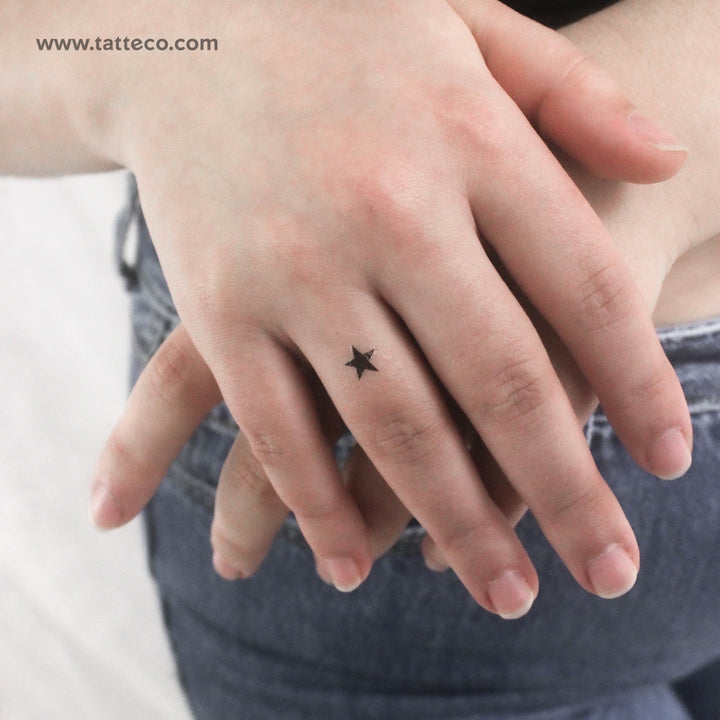
Tiny Details Don't Always Age Well
Fine-line tattoos have become extremely popular, but the finger offers very little space for intricate designs.
Permanent tattoo ink can soften and spread slightly over time. When several lines are placed close together, the details may become less distinguishable as the tattoo ages.
A design that looks beautifully detailed when freshly applied may eventually appear blurred or lose some of its original character.
For this reason, artists often recommend simpler designs with enough spacing between individual elements. The exact size, line thickness, and level of detail should be discussed with someone experienced in tattooing fingers.
They're Difficult to Hide
Unlike most other tattoos, finger tattoos are almost always visible unless you deliberately cover your hands.
This can be an advantage if you're looking for a distinctive personal accessory. But it also means the tattoo becomes part of your appearance at work, in social situations, in photographs, and during everyday interactions.
A tiny design may feel discreet in isolation yet surprisingly noticeable once it's on your hand.
A finger tattoo might take only a few minutes to get, but you'll see it thousands of times afterward.
Try a Temporary Finger Tattoo Before Committing
Choosing a permanent finger tattoo involves several decisions: the design, its dimensions, which finger to decorate, and exactly where the image should sit.
A temporary tattoo lets you test those choices in real life rather than relying solely on photographs or imagination.
It won't reproduce the experience of being tattooed or predict how permanent ink will heal. What it can do is help you understand the aesthetic impact of wearing a tattoo on your finger.
That distinction matters. You might discover that you love the design but prefer it slightly smaller. Or that the symbol you planned for your index finger actually looks better on your middle finger.
You may even realize that you prefer a tattoo on your wrist or forearm instead of your hand.
These are useful discoveries to make before committing to permanent ink.
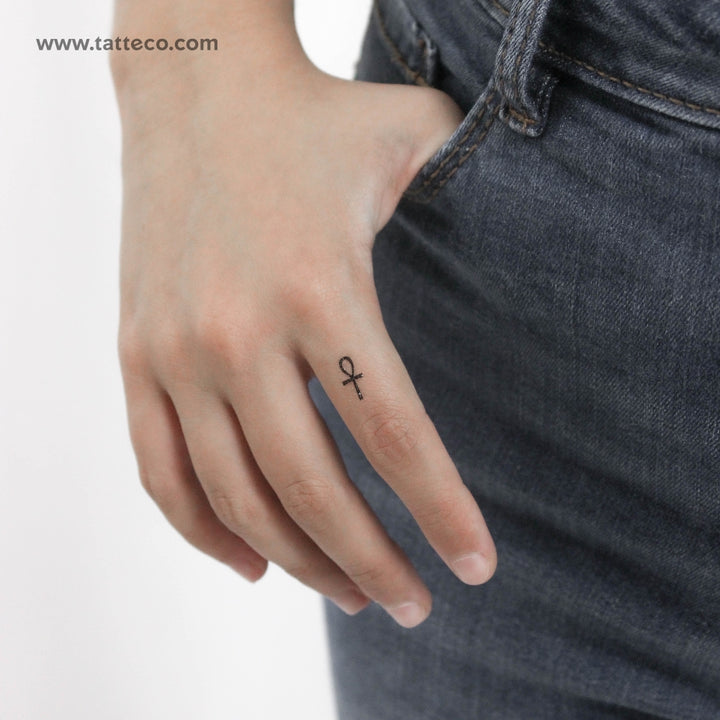
How Long Do Temporary Tattoos Last on Fingers?
There's one important limitation to understand before applying a temporary tattoo to your fingers: they usually won't last nearly as long as they would on other parts of your body.
Tatteco's regular temporary tattoos typically last between 2 and 7 days on suitable body areas. On fingers, however, the duration can be dramatically shorter.
Handwashing, soap, friction, gripping objects, and ordinary daily activities continuously wear away the transfer. Depending on where it's applied and how much you use your hands, a regular temporary finger tattoo may begin deteriorating within hours or disappear after only a day or two.
Finger placement is particularly demanding because the tattoo may come into contact with other fingers, rings, clothing, phones, and countless everyday surfaces.
This isn't necessarily a defect in the product. It's simply one of the least favorable areas for temporary tattoo longevity.
Do Semi-Permanent Tattoos Last Longer on Fingers?
Tatteco also offers semi-permanent tattoos, designed to develop into realistic-looking images that can last up to approximately two weeks on suitable body areas.
However, semi-permanent tattoos also tend to last considerably less on fingers. Frequent washing, friction, and local skin conditions can affect their appearance, development, and durability.
A semi-permanent design may give you a different visual experience from a regular transfer, but you shouldn't expect the usual two-week lifespan on your fingers.
In this location, both formats are best understood as short-term experiments rather than long-lasting alternatives to permanent finger tattoos.
And that's entirely compatible with the reason we're recommending them: the goal is to test how the tattoo looks and feels before making a permanent decision.
What Does a Faded Hand Tattoo Actually Look Like?
Photographs of fresh finger and hand tattoos can be misleading. A design may look beautifully sharp immediately after tattooing, but its appearance can change significantly as it heals and ages.
In the Instagram Reel below, tattoo artist Katherine (@kittykathtatts) shows an example of fading on a hand tattoo, including the fingers. It's a useful reminder that hand tattoos don't always retain the crisp, uniform appearance they have when freshly applied.
Watch the tattoo fading video on Instagram →Video by @kittykathtatts
Not every hand tattoo will fade in exactly the same way. Results depend on placement, tattooing technique, skin characteristics, healing, and everyday wear. But the video illustrates why it's worth considering the long-term appearance of a finger tattoo—not just how it looks on the day it's done.
What Should You Test Before Getting a Permanent Finger Tattoo?
A temporary finger tattoo can answer several practical questions that are difficult to judge from a digital mockup or drawing.
Size and Proportions
Fingers offer very little space. Even a difference of a few millimeters can transform the appearance of a design.
Try a size that feels appropriate for the width and length of your finger. Consider whether the design remains recognizable at a glance and whether it leaves enough visual space around it.
Placement and Orientation
Does the design look better facing you or someone looking at your hand? Should it sit above the knuckle, below it, or toward the side of the finger?
Apply a temporary tattoo and observe your hand in different positions. A design that looks balanced when your fingers are straight may appear different when you're holding an object or bending your hand.
How It Looks With Rings
Rings and finger tattoos can complement each other, but they can also compete for attention.
Try wearing your usual jewelry alongside the tattoo. Notice whether the composition feels elegant, crowded, balanced, or overly decorative.
How Comfortable You Feel Wearing It
Perhaps the most important test has nothing to do with the design itself.
Look at your hands throughout the day. Notice how often your attention returns to the tattoo and how you feel about seeing it.
Does it seem like a natural extension of your style? Would you be happy to see it every morning? Does it feel too conspicuous?
There's no correct answer. The purpose of the experiment is to discover your own preference.
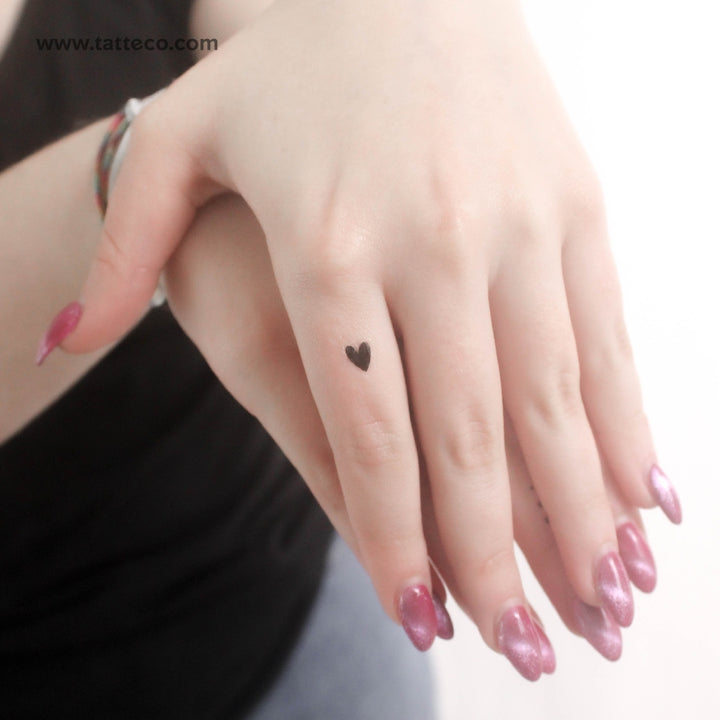
Where Is the Best Place for a Finger Tattoo?
Not all finger placements behave the same way. The exact position influences visibility, comfort, how the design fits the hand, and the reliability of permanent ink retention.
Top of the Finger
The upper surface of the finger is among the most popular placements for small symbols and minimalist designs.
It offers good visibility and generally provides a more favorable surface for permanent tattooing than the sides or palm-facing areas.
Even here, however, fading and loss of definition remain possible.
Side of the Finger
Side-of-finger tattoos have a subtle appearance, particularly when the design is hidden from some viewing angles.
They can work beautifully from an aesthetic perspective, but permanent tattoos in this location are especially vulnerable to uneven ink retention.
The transition between different types of finger skin and the friction between neighboring fingers can make healing and long-term results unpredictable.
Near the Knuckles
The knuckles provide an eye-catching location, especially for compositions involving several fingers.
Because the skin stretches and folds when the hand moves, placement needs to account for how the design looks with both straight and bent fingers.
Near the Fingernails
Tiny designs near the nails can create a delicate, decorative effect.
Space is extremely limited, however, making simple shapes generally more practical than intricate illustrations.
Ring Finger
Ring-finger tattoos have become particularly popular as personal symbols and alternatives to traditional jewelry.
They can be meaningful for couples or simply for people who enjoy the appearance of a small decorative element in a familiar jewelry position.
Permanent bands that extend around the sides and underside of the finger require special consideration because ink retention may vary significantly around the circumference.
Choosing a Design That Works on a Finger
Small tattoos are not automatically simple tattoos.
An elaborate illustration reduced to a tiny scale may contain more detail than finger skin can reliably accommodate over time.
For permanent work, recognizable silhouettes, adequate line spacing, and relatively uncomplicated compositions are often more practical.
Minimalist designs can be visually effective precisely because they don't attempt to fill every available millimeter.
Another possibility is to use several small tattoos across different fingers, creating a composition that works as a whole. The elements can share a visual style without needing to be identical.
Before committing to a complete permanent composition, temporary designs allow you to explore how the individual elements interact with one another and with the natural movement of your hands.
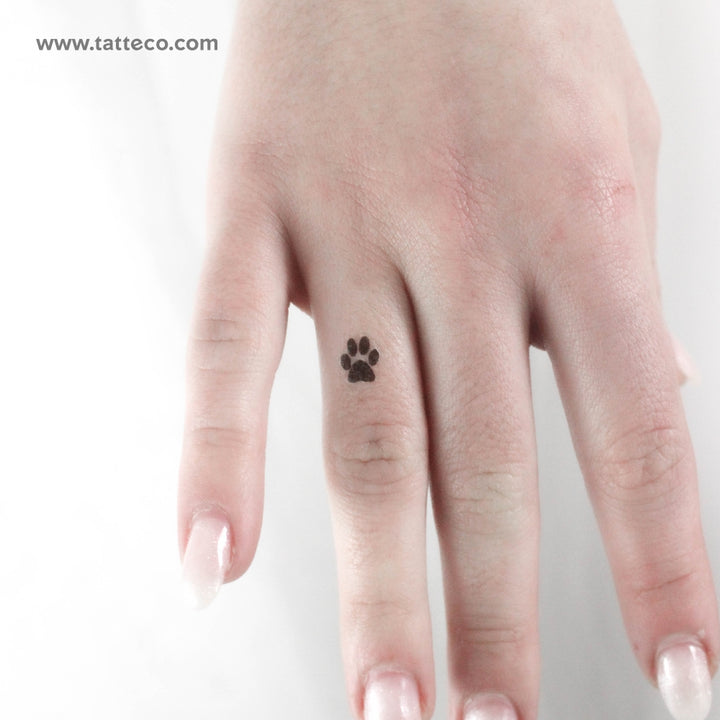
A Simple Way to Test Your Finger Tattoo
If you're seriously considering a permanent finger tattoo, a short trial can help you make a more informed decision.
- Choose a design similar to the permanent tattoo you're considering. Focus on its overall shape and proportions.
- Apply it to your preferred finger. Follow the product's application instructions and avoid broken or irritated skin.
- Take photographs immediately. Photograph your hand relaxed, with your fingers straight, and while holding everyday objects.
- Wear your usual rings and accessories. See how the tattoo fits your existing style.
- Continue your usual routine. Pay attention to how you feel about the tattoo during ordinary activities.
- Experiment with a different placement if necessary. A small adjustment may significantly improve the composition.
- Discuss the result with your tattoo artist. They can advise whether your chosen design and dimensions are suitable for permanent ink.
Remember that a temporary tattoo fading quickly on a finger is expected. The experiment is about appearance and placement, not predicting the durability of a real tattoo.
A temporary finger tattoo isn't a test of how long the real tattoo will last. It's a test of whether you like the design enough to wear it permanently.
Can a Temporary Tattoo Really Help Prevent Tattoo Regret?
No temporary tattoo can guarantee that you'll remain happy with a permanent design forever.
Personal tastes change, relationships evolve, and the way we feel about our appearance can shift over time.
What a temporary tattoo can do is remove some of the uncertainty surrounding an immediate decision.
Instead of imagining what a finger tattoo might look like, you can experience it. You can discover whether a design feels too large, whether another finger suits it better, or whether the constant visibility is something you genuinely enjoy.
For someone inspired by celebrity finger tattoos, that can be especially valuable. A design that looks perfect on a model, musician, or athlete may have a very different effect on your own hand.
Temporary tattoos make it possible to experiment with the aesthetic without needing to copy someone else's permanent commitment.
Frequently Asked Questions About Finger Tattoos
Do finger tattoos hurt more than other tattoos?
Finger tattoos are often more painful than tattoos on fleshier areas because of the high concentration of sensory nerves and limited cushioning over the bone. Most designs are small, however, so sessions can be relatively brief.
Do permanent finger tattoos fade quickly?
Finger tattoos are particularly prone to uneven fading and loss of definition. The sides and palm-facing surfaces of the fingers are often among the most challenging areas for lasting ink retention.
How long do temporary finger tattoos last?
Regular temporary tattoos can last 2–7 days on suitable body areas, but finger tattoos often wear off much faster. Frequent handwashing and friction can cause deterioration within hours or after only a day or two.
Do semi-permanent tattoos last two weeks on fingers?
Not reliably. Semi-permanent tattoos can last up to approximately two weeks on suitable areas, but fingers are exposed to considerably more washing and friction. Their lifespan on fingers can be significantly shorter and more unpredictable.
Can temporary finger tattoos help me choose a permanent tattoo?
Yes. They are useful for testing design, size, orientation, placement, and daily visibility. They cannot predict how permanent ink will heal, spread, fade, or age.
What finger tattoo designs are best for permanent ink?
Simple, legible designs with sufficient spacing generally offer a better starting point than extremely detailed miniature illustrations. Your tattoo artist should assess the final design, as finger tattoos remain unpredictable even when professionally executed.
Can I try different finger tattoo placements?
Yes. Temporary tattoos make it possible to experiment with different fingers and positions before choosing a permanent location. Taking photographs of each arrangement can help you compare the results.
Are finger tattoos a good choice for a first tattoo?
They can be, but their visibility, pain, and maintenance requirements deserve consideration. Someone getting their first tattoo may benefit from testing the look temporarily and discussing the practical limitations with an experienced artist.
Try the Look Before Making It Permanent
Finger tattoos have come a long way from being an unconventional form of body art to becoming a recognizable part of contemporary fashion.
Celebrities helped make them desirable, minimalist tattoo trends made them accessible, and social media continues to introduce new ideas for decorating the hands.
But a permanent finger tattoo deserves more consideration than its small size might suggest.
It can be painful, difficult to maintain, and almost constantly visible. The design may also need to be adapted to ensure that it works as permanent ink rather than simply looking attractive in a photograph.
Trying a temporary tattoo first won't solve all those challenges. What it can do is help you decide whether you enjoy the appearance of the tattoo on your own finger.
And if you discover that you'd prefer something smaller, a different placement, or no finger tattoo at all, you can change your mind without regret.
The best time to discover that you prefer a different finger tattoo is before the needle touches your skin.
Ultimately, temporary finger tattoos aren't about creating a long-lasting result. They're about giving yourself the freedom to experiment before making a permanent decision.


